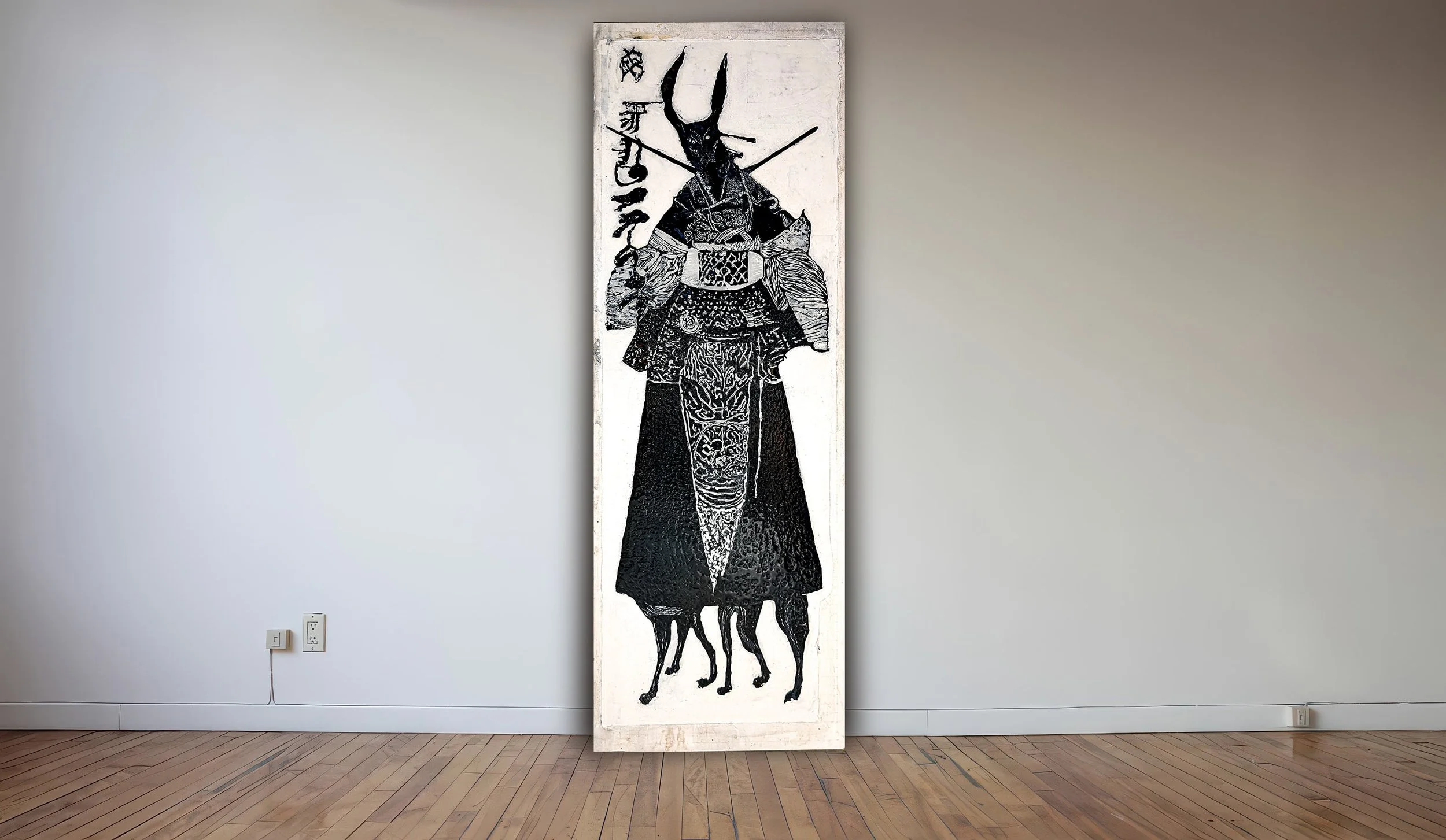
Sutekh
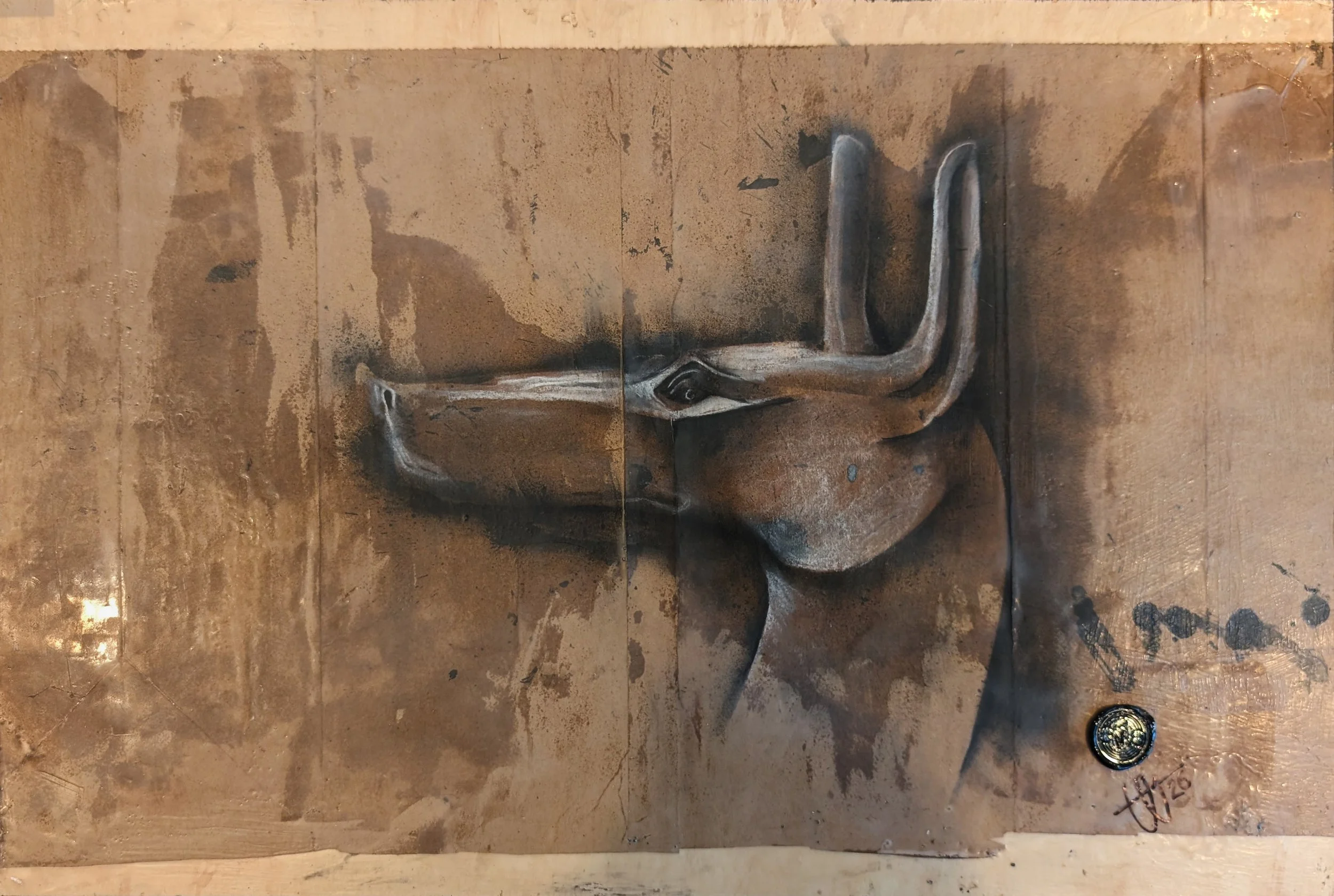
This piece was the one that started the whole series. The chaos god of pre-dynastic Egypt. An amalgam of Egyptian, Japanese, and even Norse mythological references. It is still the piece people ask the most about. Since selling all five of the existing prints, I decided to retire the piece by filling the voids with pigmented epoxy and selling it as the original.
-
28 × 80 Inches
-
Acrylic, ink, and epoxy on plywood base
-
Collector Premium Delivery
(Fully Insured) +$300.00Artwork carefully rolled around an archival, acid-free core
Wrapped in protective glassine and buffered tissue
Placed in a heavy-duty crush-resistant shipping tube
Hanging mechanism individually wrapped to prevent abrasion
Interior cushioning added to eliminate movement in transit
Shipped via UPS or FedEx Ground with full tracking
Fully insured for the declared value of $5,300
Signature required upon delivery
Professionally packed and dispatched from studio
Prisoner #1
Many of the most imposing carvings from the ancient world depict the subjugation of other cultures and kingdoms. Giant Kings, Shahs, and Pharaohs, looming large, like giants above the diminished forms of the vanquished. The bodies of the warriors are often displayed, twisted and contorted, under the victor's feet. Even Michelangelo found this violent contraposto provocative and inspiring.
-
14 × 11 Inches
-
Charcoal and graphite on Arches paper on a wood frame.
-
Currently, within a sunken black frame.
Prisoner #2
Second in the series of a reworking of the theme of the conquered soldier in retreat or repose. I wanted this figure to reflect the way that hieroglyphics portray figures in a very exact kneeling pose, almost architectural. The proportions are exaggerated in a mannerist way to show contortion and discomfort–the somber colors to reflect isolation.
-
7 × 10 Inches
-
Charcoal and graphite on Arches paper on a wood frame.
-
This piece is available for delivery.
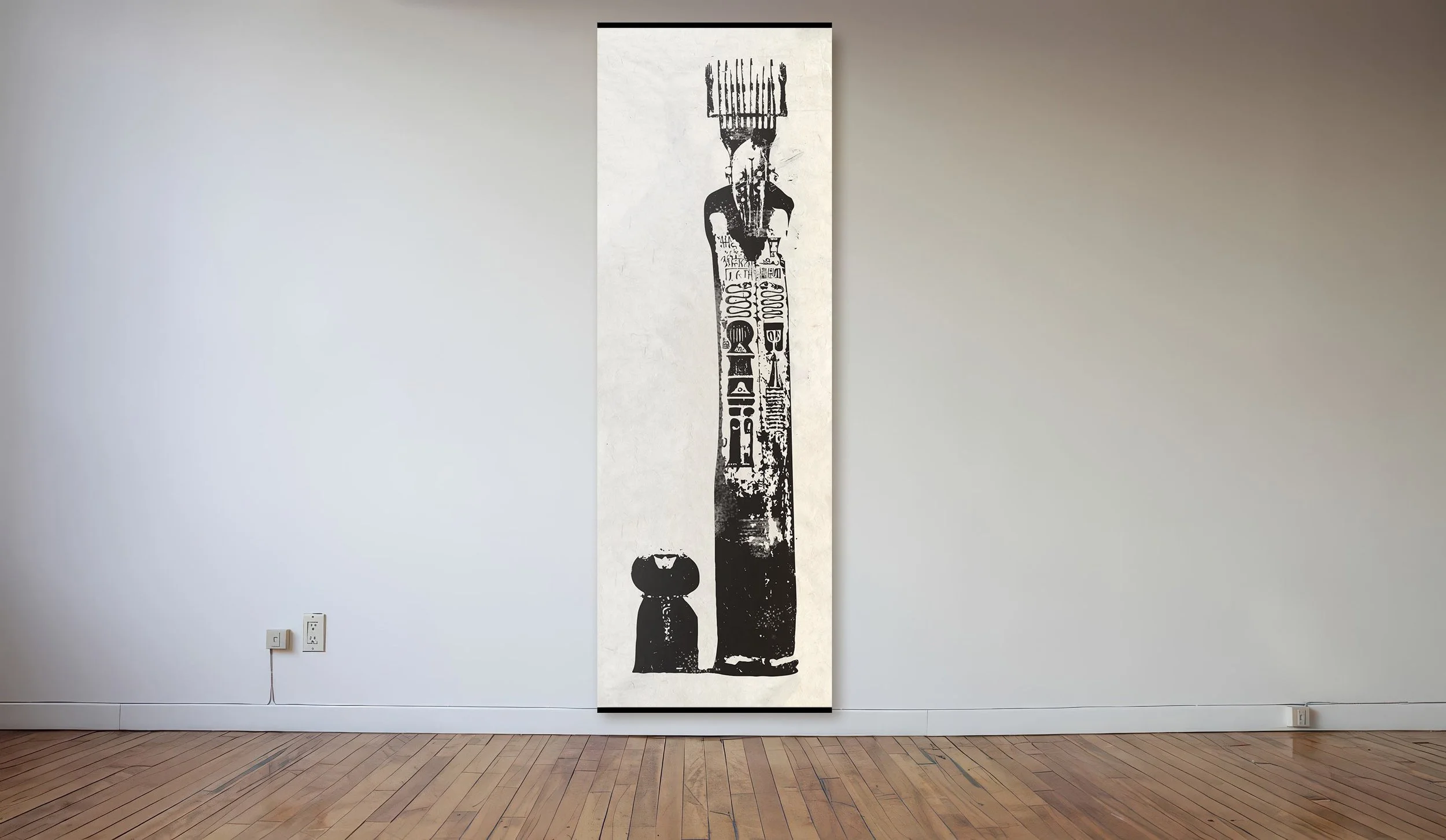
Heka
I saw a gallery patron staring at this piece for a long time. After talking to some other people at the show, I glanced over and saw that the woman had begun to weep. I approached her and asked if she was offended by the piece. She said, "I would buy this right now, but if I had it in my home, I wouldn't be able to look away." The impact of the piece will never be forgotten. This work is intended to represent the god of magic, and if it captures and holds anyone's gaze, it is a success.
-
36 × 72 Inches
-
This is an ink woodblock print that has been made on Japanese Washi paper. It comes with its own hanging apparatus.
-
Collector Premium Delivery
(Fully Insured) +$300.00Artwork carefully rolled around an archival, acid-free core
Wrapped in protective glassine and buffered tissue
Placed in a heavy-duty crush-resistant shipping tube
Hanging mechanism individually wrapped to prevent abrasion
Interior cushioning added to eliminate movement in transit
Shipped via UPS or FedEx Ground with full tracking
Fully insured for the declared value of $5,300
Signature required upon delivery
Professionally packed and dispatched from studio
Chimera
In this piece, I drew inspiration from Egyptian hieroglyphics and composite animals from ancient mythology, such as the Chimera. I wanted to create a symbolic language that exemplified strength, pride, and the interconnectedness of nature.
-
26 × 32 Inches
-
Charcoal and acrylic medium on stretched canvas
-
Currently, within a sunken black frame. It can be shipped rolled in a tube upon request
Hieroglyphics #1
To complete the reimagined world I needed to give the denizens their own culture and philosophy, including their own script and hieroglyphics. These are abstractions of animals, humans, and daily implements turned into chthonic symbols and occult signifiers.
-
14 × 10 Inches
-
Ink, acrylic, and encaustic wax on board
-
Piece is flush with no frame and approximately 1.5” deep
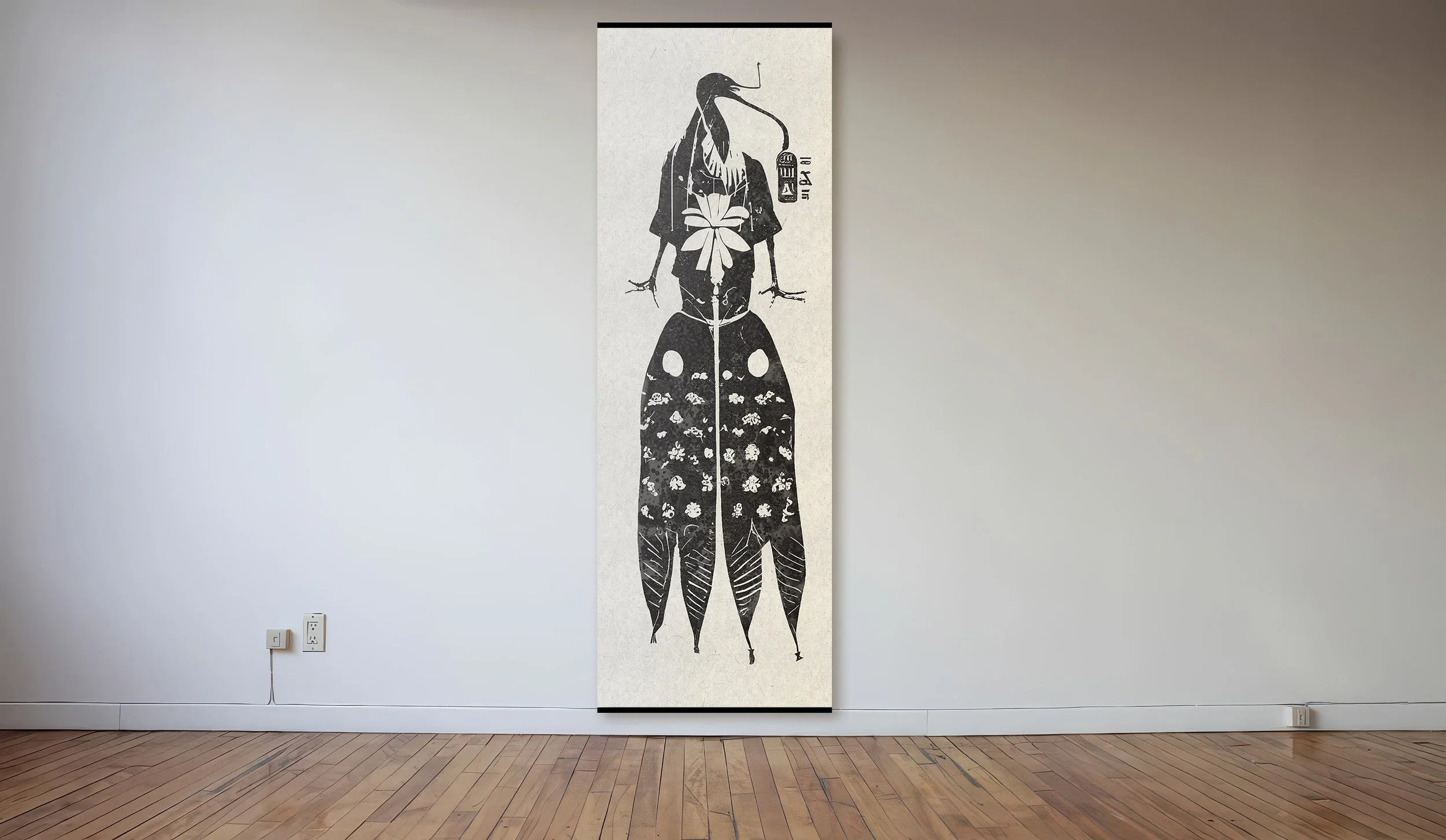
Thoth
Thoth—Djehuty in the oldest texts—is less a “god” in the narrow sense and more a structural principle of consciousness. In Egyptian cosmology, he arrives at the moment when the raw, uncarved chaos begins to differentiate. If Atum is the first stirring of being, and Ptah is creation through intention, then Thoth is the first articulation—the Word that names, measures, and thereby makes possible the world.
-
36 × 72 Inches
-
This is an ink woodblock print that has been made on Japanese Washi paper. It comes with its own hanging apparatus.
-
Collector Premium Delivery (Fully Insured) +$300.00
Artwork carefully rolled around an archival, acid-free core
Wrapped in protective glassine and buffered tissue
Placed in a heavy-duty crush-resistant shipping tube
Hanging mechanism individually wrapped to prevent abrasion
Interior cushioning added to eliminate movement in transit
Shipped via UPS or FedEx Ground with full tracking
Fully insured for the declared value of $5,300
Signature required upon delivery
Professionally packed and dispatched from studio
En’net Priest
This crouching female nude wears the head of a great river fish—a mask that transforms her from mortal into emissary. She is a priestess of En’Net, the god of the Nile, whom I have imagined as a man with the head of a Nile carp.
En’Net embodies the cycle of abundance and reckoning: the reminder that the fattest fish is the first to be pulled from the water. The cult of En’Net warns against vanity, pride, and the illusion of safety in excess.
-
23.5 × 17.5 Inches
-
Charcoal and graphite on Kraft paper mounted on board.
-
Framed and ready to send
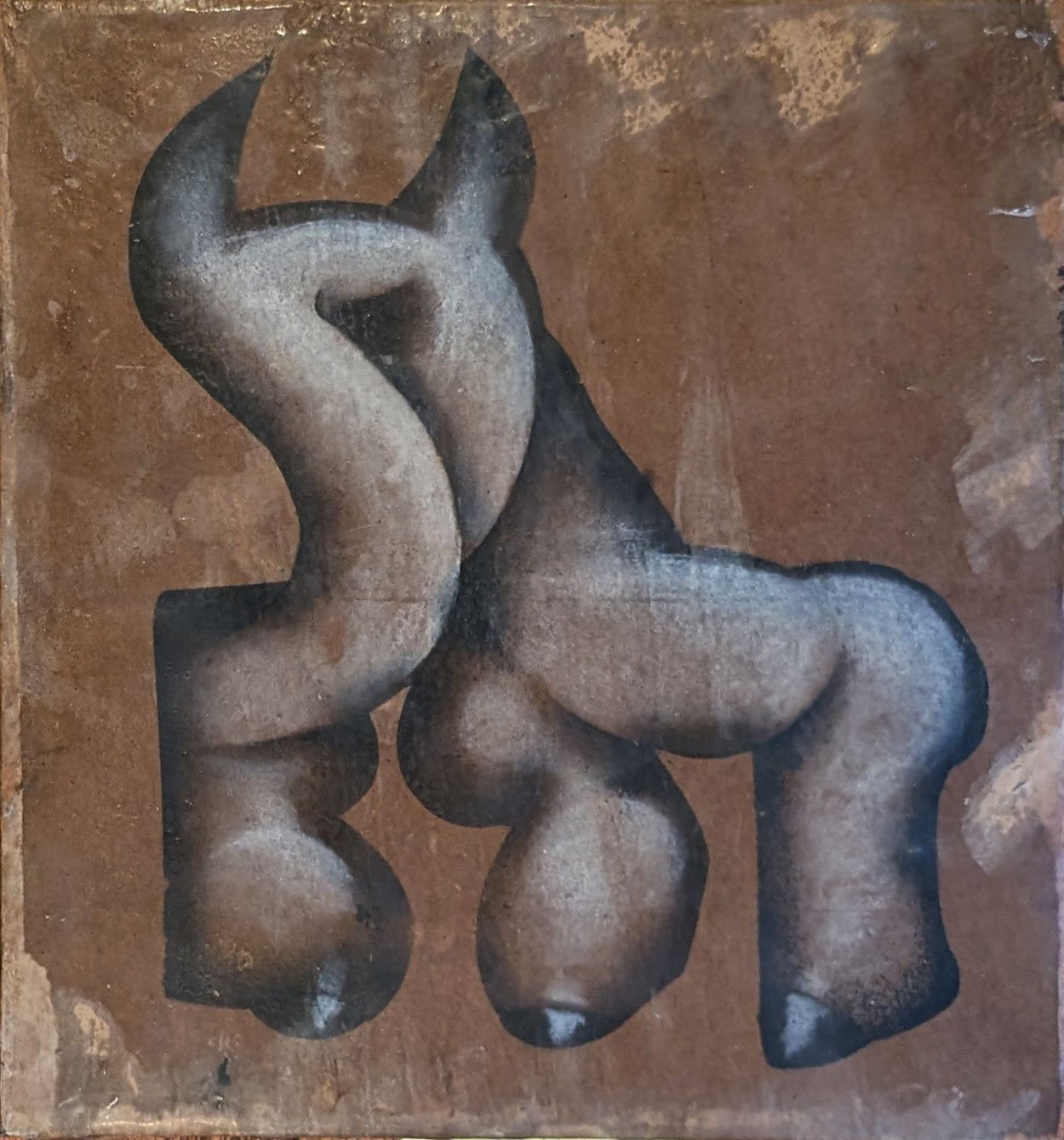
Seshem
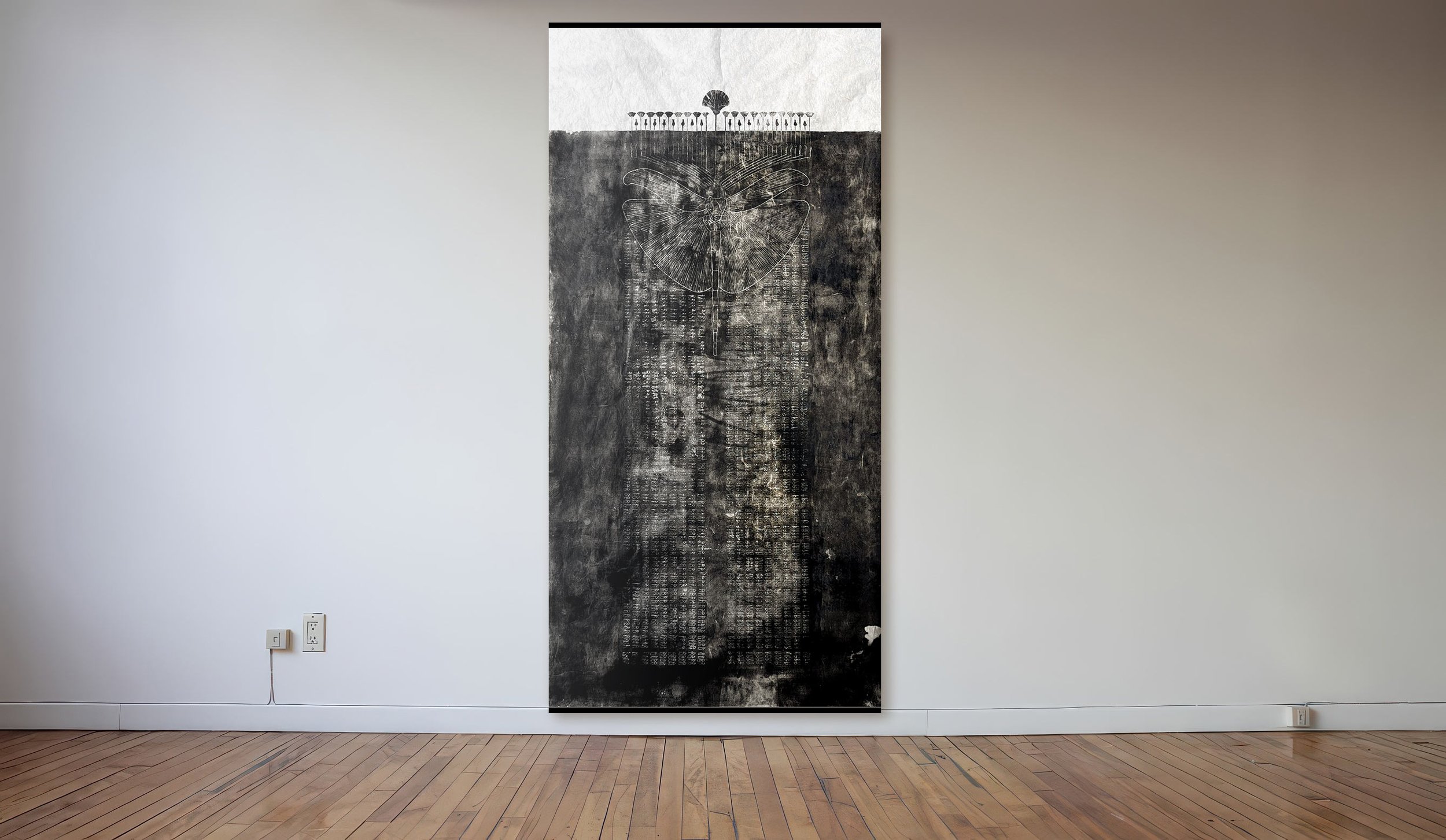
Seshem is a trickster figure who delights in disrupting the established order, causing chaos and upheaval. However, this disruption generates new beginnings and opportunities for growth and renewal.
This deity represents the chaotic force of nature that disrupts the natural order. In Egyptian mythology, the locust was associated with destruction, as swarms of locusts could devastate crops and other vegetation. His central importance to the Shayt Remef culture is closely tied to the worship of Seth. He mocks order, hierarchy, and stasis.
-
36 × 72 Inches
-
This is an ink woodblock print that has been made on Japanese Washi paper. It comes with its own hanging apparatus.
-
Collector Premium Delivery (Fully Insured) +$300.00
Artwork carefully rolled around an archival, acid-free core
Wrapped in protective glassine and buffered tissue
Placed in a heavy-duty crush-resistant shipping tube
Hanging mechanism individually wrapped to prevent abrasion
Interior cushioning added to eliminate movement in transit
Shipped via UPS or FedEx Ground with full tracking
Fully insured for the declared value of $5,300
Signature required upon delivery
Professionally packed and dispatched from studio